
A partial view we collectively agreed to treat as the whole picture
Or what's going on in my mind every time someone on a stage says "AI changes everything."

On my mind this week month
For some time now, when I go to events, whether I’m a speaker or not, somewhere between the second conference panel of the day and the third keynote variation of “so what does AI mean for our industry” I realize I genuinely have nothing nice useful to say. And, that’s a pretty odd place to land after being in this business for 15 years and sharing my opinions about this industry for a living…
Don’t get it twisted, I love being in rooms and getting inspired by great work, and interesting topics, but lately I keep finding myself leaving them carrying more questions than I walked in with, which either means I’m finally paying attention, lol, or the ground is actually moving under all of us and we’re collectively very good at not mentioning it on stage.
¯\_(ツ)_/¯
Probably both.
Every time I hear someone saying "AI changes everything," what's going on in my mind while everyone else is nodding is more or less what you will read below (which reminds me, never write content at 2 am :D)
And, I guess I don't do well with the feel-good keynote stuff, never have, so consider this one a tour of the things currently making me cautiously excited, and probably the reason I look slightly out of place in these contexts :)
The assumption we all agreed to
We built an entire industry on the premise that intent was the moment that mattered. And sure as hell, it still does.
Someone searches, someone clicks, someone converts, and somewhere in that chain we plant a flag and call it attribution. Years of increasingly sophisticated tooling, all pointed at the same belief: the decision happens at the bottom of the funnel, and our job is to be there when it does.
The problem with that belief was never accuracy as much as completeness. It was always a partial view we collectively agreed to treat as the whole picture, because the whole picture was really hard to measure (and continues to be so).
I argued a version of this last year, when I wrote that we can’t call it customer experience if we’re only optimizing the last 5% of the journey and that experience is shaped by interpretation, and interpretation happens long before anyone lands in an environment you own.
What’s changed since then is that the company that benefited most from the old model (messy middle) has now conceded the point on stage, with a product roadmap attached.
At Google Marketing Live in May, Vidhya Srinivasan, VP and GM of Google Ads and Commerce, put the whole strategy into one line:
“Now, you can ask Google anything, so the best ads must be answers.”
And, well, it hit home with me in a way that I cannot explain. I guess if I think of the work I’ve been doing for the past 10 months, it makes more sense than anything.
So, if the best ads must be answers, then the moment that matters has moved upstream of the query, and the unit of marketing is shifting with it, from search intent to participation, from showing up at the query to permeating the culture where the query forms. From curiosity all the way to checkout.
You can look at this statement as a creative mandate if you want; I read it as a conclusion that the industry has been showing up to the wrong moment for a while, and continued calling it performance.
Let’s see. AI Mode went from zero to roughly a billion monthly users in about twelve months, queries there run on average three times longer than traditional searches, one in six arrives as voice or image rather than text, and brainstorming queries are growing 30% faster than AI Mode overall.
Generally people are bringing earlier, messier, more exploratory questions into these environments, and that matches what decisions actually look like when you stop staring at the conversion path. For example, I have been exclusively using AI Mode for a while because it’s easy to follow-up, ask questions, double-down etc.
Decisions start in a mood. A late-night scroll that wasn’t looking for anything in particular. A YouTube rabbit hole that began with “ideas for” and ended somewhere nobody briefed for. A conversation with an AI model that started as a question and became, somewhere along the way, a considered opinion.
By the time someone types the high-intent query our dashboards are pointed at, the consideration set is already half-formed, shaped by moments that left no clean signal anywhere we’re looking.
A “help me decide” conversation is a completely different human moment than a “buy now” click, and we’ve been briefing, planning and measuring almost exclusively for the second one.
Google's response, announced at the same event, is advertising rebuilt for that earlier moment: new formats like Conversational Discovery and Highlighted Answers, generated dynamically to respond to the specific question and the AI answer surrounding them, placed inside the conversation itself rather than above or beside it. This way the ad stops interrupting the journey and starts posing as part of it, which is exactly what "the best ads must be answers" looks like when it ships as a product.
Follow the business model
The ad formats are the visible part of this story, and also the least interesting one. What's actually being built underneath them is the rest of that curiosity-to-checkout “journey”.
As we all know, in January, Google launched the Universal Commerce Protocol that gives AI agents a common language to talk to merchant systems across discovery, checkout and post-purchase support.
In May at I/O came Universal Cart, a cart that follows you across Search, Gemini, YouTube and even Gmail, hunts deals and price drops in the background, and checks out through Google Pay with retailers like Nike, Sephora, Target, Walmart and Wayfair. Walmart went as far as building an entire shopping experience directly inside Gemini on top of the protocol.
Google spent YEARS selling the click that happened at the moment of intent, and is now building to own the entire span where intent forms: the question, the comparison, the cart, and increasingly the payment. The conversation became the product, and the transaction comes bundled with it.
Personally, I think it’s pretty awesome and exciting, as an analyst, ALSO if there is someone that can get people to finally use agents for shopping it will 100% be Google because of their ecosystem making it “feel safe” and convenient.
But for brands, this rewires the job description. When an agent handles discovery, comparison and checkout, you influence the outcome through the structured data you expose to it like Merchant Center attributes, feeds, the reviews and sources the models treat as credible, rather than through your site’s merchandising or a paid placement at the point of decision.
Now, let’s pause here for a sec. I’m a big fan of sources, citations and stats as I tend to always research and give people enough context whenever I write anything.
And, I was telling Kelly from The TLC Connector | Teach. Learn. Converse. and Slobodan Manić in a recent webinar we did that every time I hear some stats about AI usage/adoption, etc, I ask myself…. “Who are these people?” Meaning like, ok we have a % but % of what? What is the population we are looking at?
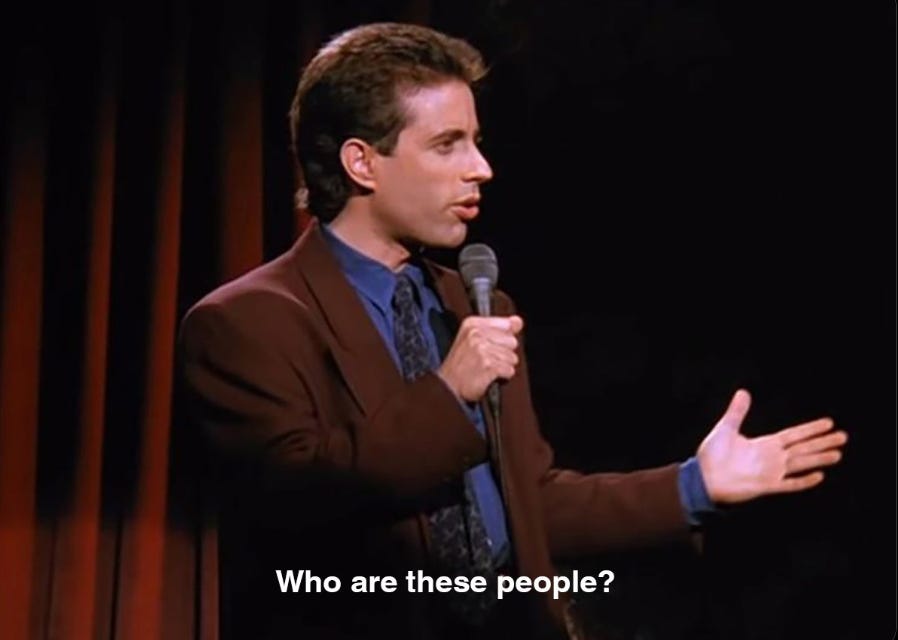
This means that we need to be very clear here, because the infrastructure is running ahead of the behavior.
People are not buying through agents at any meaningful scale yet; they research, compare and plan in the AI conversation, then walk over to the website or to Amazon to complete the purchase.
Pre-purchase research is the top consumer AI use case for sure, across markets, while actual in-chat buying barely registers, and we know this partly because OpenAI just learned it the expensive way: in March it scaled back Instant Checkout, the feature that let people buy directly inside ChatGPT, after finding that users were exploring and comparing products there without completing purchases. Discovery was growing faster than transactions, and consumers still default to the checkout flows they already trust.
So the protocols are a bet on where behavior goes, with Google holding the pieces OpenAI lacked (Merchant Center, payment rails, a checkout people use daily), rather than a description of how people shop this morning, lol. As said above, if anyone can really pull this off, it will be Google.
But before anyone relaxes, look at what today’s actual behavior does to your numbers. If the decision forms in an AI conversation and the purchase completes on your site, your analytics record a direct visit or a branded search converting, the dashboard says your funnel is performing, your team takes the credit, and nobody asks why. But, in fact, what you’re seeing is the harvest of a decision that was made somewhere you have no visibility into. The misattribution arrived before the agentic checkout did, which brings us to the stack.
…and, nothing in our stack was built for agents :)
I’ve been talking about this with Daniel Smulevich, not too long ago when we were working on a pitch together, about how autonomous agents break nearly every assumption our measurement and governance systems were built on, and they do it from 2 directions at once: the agents researching you on behalf of customers that you can't see (and one day, buy from you), and the agents you deploy inside your own systems that you can’t yet govern, because hey, who doesn’t love top-down AI mandates.
Our analytics stacks assume a human who clicks links, loads pages and generates session data. Agents do none of that, for example, they don’t trigger client-side JavaScript, they make API calls directly to merchant systems, which means pixel-based tracking develops blind spots that grow exactly as fast as agent traffic does.
When the comparison and the recommendation happen inside a conversation, there is no impression to log, no click to attribute and no session to stitch together, and in the fully agentic purchases the protocols are built for, the first signal a merchant sees is the order webhook.
BrightEdge's April data puts AI agent activity at roughly 15% of total website traffic, with agent requests already at 88% of human organic search volume and projected to pass it before the end of the year, and because that activity doesn't show up in whatever analytics tools used, most companies have no visibility into it at all.
At the security layer it’s quite funny (to me). I saw this HUMAN Security's 2026 benchmark report that basically says that behavior which once looked like an attack like super fast page navigation, programmatic form completion, automated checkout, etc, may now just be a legitimate agentic commerce workflow. Which makes me think a lot about what decisions need to be made to deal with this type of tracking, what do we allow, what do we block anymore… and mostly, what will we continue to normalize? That's the outside-in half.
The inside-out half is organizations putting agents to work inside their own operations, allocating budgets, adjusting bids, triaging tickets, moving data through pipelines, making decisions that used to pass through a human, and boy look it here… the oversight has not kept pace with the deployment.
Deloitte’s State of AI in the Enterprise found that only one in five companies has a mature model for governance of autonomous AI agents, even as agentic usage is set to rise a lot.
And then I saw this Kore.ai survey saying 53% of organizations deployed autonomous agents without fully understanding how they would behave (LOL, not surprised) nearly four in five have had to manually reverse an agent’s actions, and 42% report agent failures that directly caused revenue loss. Which again, are we even surprised??? Giving an autonomous entity full control over your processes without governance and human in the loop, what can possibly go wrong???
Now, what’s important is the data warehouse sits underneath both halves, and this is the part I’d put in bold on every data strategy deck this year: the modern data stack most enterprises actually run was designed to batch-process human behavioral exhaust into reports that humans read weekly, while agents, yours and everyone else’s, need accurate, structured, real-time data they can act on immediately. AND TONS OF GOVERNANCE.
Agents parse structured product data directly, and products without proper markup force agents to guess, and let me tell you this, agents do not tend to guess in your favor.
The demand side has already arrived, Adobe Analytics measured AI referred traffic to US retailers growing 393% YOY in Q1 2026, converting 42% better than traditional traffic, basically people doing their deciding in the AI conversation and showing up at your site ready to buy, which your analytics then read as an unusually persuasive landing page. (ohhh it’s CRO :))
What hasn’t arrived, in most organizations I see, is the data quality, semantic clarity and governance to meet it, which means that if consumer demand for AI shopping is real, well…. the merchant infrastructure cannot yet capture it.
Implementing the protocols without fixing the data underneath amounts to opening a storefront with empty shelves, and pointing your own agents at stale, ungoverned or semantically murky data amounts to automating the murk.
If there’s one thing I want you to remember from this section is that the data warehouses we all know and “love” were not designed to support systems that reason, act and make decisions autonomously, at speed, across live business processes.
That’s pretty much it.
ALSO, If you want to read more on this topic, check these articles out:
https://stackoverflow.blog/2026/05/27/agents-on-a-leash-agentic-ai-remains-mostly-monitored-at-work/
So, what actually survives?
If decisions now form in conversations we can’t see, and the click economy stops rewarding position, then the thing that should survive is whatever the models themselves trust and reach for when they assemble an answer. Brand, basically.
An answer engine doesn’t show the user 10 options, it commits to a few names, and it picks them based on everything it has read about your category, most of which you didn’t write. (reminds me of that Moz study I saw some months ago)
So, whether you show up in that answer depends on being mentioned, described consistently, and treated as credible across the whole web, not on whatever position you ranked or paid for last quarter. And that changes the nature of the game completely, because rankings were always something you could win with tactics, quarter by quarter, while being the name the model reaches for is accumulated slowly, by being known for something. Which is… literally just brand.
#1 stopped being the asset, and being the brand the model trusts became the asset. And I guess the thing performance marketing spent years treating as unmeasurable fluff turns out to be one of the most defensible lines on the balance sheet. Funny how that works :)
And if brand is what survives on the outside, judgment is what matters on the inside.
Inside the organization, AI is compressing everything that's procedural, we tend to call it efficiency. Pulling the report, adjusting the bids, drafting the copy, moving data through pipelines…
What the machine can't give you is someone who can look at its output and know whether it's right, because knowing whether it's right takes context and domain expertise the model doesn't have about your business, your customers, your weird edge cases. So you end up with the same structure as brand: the procedural stuff became cheap, and the accumulated stuff is what's left. Brand is accumulated trust on the outside. Judgment is accumulated trust on the inside.
This is where the human-in-the-loop conversation should stop being a buzzword and become an org chart question. If you’re putting AI into your workflows (and at this point you are, whether you decided to or not), you need people with a mix of technical skills AND subject matter expertise working side by side with the models.
Yes, so many workflows, new tech, automation and endless possibilities, but these outputs are still shit and need A LOT of data management, data engineering, Q&A and human expertise.
Same goes for the work itself, creative, media planning, briefs. I keep arriving at the same answer: the future of a useful brief needs an abundance of signals, from search and from creative together, anchored by robust performance data, so brands can tell relevant stories, stories that matter, rather than stories that convert. Creative and media planning are converging into the same story whether the org chart likes it or not, because the journey they describe was never actually separate.
There’s also a trap waiting specifically for those of us who built the current playbooks. The IKEA effect (credit to Jules Stuifbergen, whose comment sent me down this path) is our tendency to fall in love with the things we assembled ourselves and treat them as the default for how things should be. And the dashboards and attribution models we’re defending right now were business model assumptions as much as measurement choices, and the business model just changed underneath them.
Being cautiously excited means knowing…
Search turning into conversation, curiosity becoming the actual top of the funnel, the whole discipline getting to rethink how decisions form instead of just how clicks convert. Yes, all exciting, and, as an analyst, this is the most interesting the work has been in years.
Being cautiously excited means knowing the difference between what shipped and what people adopted, between a protocol announcement and a human actually buying something through an agent.
It means knowing that when the dashboard says “we’re converting,” the best follow-up question is “converting on a decision made where, exactly?”
It means knowing that if only one in five companies can govern their own agents, the answer is putting expert judgment next to the machines, before the machines automate the mistakes. (and rethinking your data warehouse)
And it means knowing that “AI changes everything” is technically true and completely useless at the same time.
It means realizing your data foundation just became your storefront, and the most valuable people in your organization are the ones who can look at a model’s output and tell you whether it’s right.
We’ve been measuring the exhaust fumes and calling it the engine, and the honest, shitty, uncomfortable but equally exciting work of the next few years is learning to measure the engine.
Until next time,
x
Juliana
Other stuff worth mentioning:
I’m planning a Substack Live soon with Denis Golubovskyi from Stape. We know that the ways people discover, evaluate, and purchase things have fundamentally outgrown the linear web session. So I want to talk to Denis to find out where we are heading in terms of the data we use to make decisions, how to orchestrate fragmented signals across multiple touchpoints, and what it looks like to build a data infrastructure that reflects the true complexity of the modern consumer lifecycle.
Watch your emails for details to sign up :)I’ll be speaking at SMX Advanced Europe this September about creative effectiveness on Youtube where I will look at what a decade of YouTube creative actually teaches us, why creative intelligence matters more than ever when the funnel is just a conversation, and how to achieve it. We will talk about when creative insight meets performance data, what asset contribution really tells you about your campaign, and how to write better briefs, because in 2026, a great brief is a translation of signals into creative direction a team can actually execute.
Jason Packer launched a new Chrome extension called SlopGuard, 100% local AI image detection system that tells if the images you see across different web pages, forums etc are slop or not. The extension uses (in order): metadata, SynthID invisible watermarks, and a full image classifier. The image classifier has worked well in testing, but is never going to get everything right. Turn on the debug option to see individual test details.
Like AI my career has been technically true and often completely useless... good work and thank you for your thoughtful work. /Mike